

About Us
Who is Freedom Financial Services?
Our company is a proud partner of Larsen Family Enterprises Group, marketplace of independent businesses dedicated to the shared mission to, empower those we serve to create their personal vision of a "Thriving Successfully i" life.
Freedom Financial Services is committed to the belief that every person has the rightb5o create financial freedom and we empower our clients to create the success they desire by providing training and coaching , as well as access to products and services that will help them achieve their goals.
Our values promote independence and sef-reliance. The Services we provide are focused on promoting these values for our clients. We do not supply "pre-determined" and "done for you" plans and packages of Services that restrict the options available to our clients. Instead, we focus on finding options and opportunities that uniquely meet the individual needs and desires of the people we serve, providing training and support to empower them to monitor, maintain and grow wealth and success for their family.
Book a Free Call to Discuss how We can empower you to achieve your dreams!
Meet Our Team

Jeanette Larsen
Executive Director

Jeanette’s passion for empowering others to create thriving, successful lives drives Larsen Family Enterprises. She believes real success comes from empowering others while committing to personal growth and excellence. Through leading by example, Jeanette inspires others to achieve their goals, leaving a lasting legacy of success and empowerment.

Tricia White
Advocate/Educator
Tricia has an extensive Professional and Management background in finance and business with years of experience working with kids in Junior Achievement helping them learn the skills leading to success.
Tricia brings her business expertise and love for working with kids to Larsen Family Enterprises Group & its partners to support and empower our clients & their kids to create their thriving successfully lives.
Hear From Our Clients
We offer financial
wings to let your
dreams soar higher
Lorem ipsum dolor sit amet, consectetur adipiscing elit. Quisque nisi nunc, tincidunt non nibh non, ullamcorper facilisis lectus. Sed accumsan metus viverra turpis faucibus, id elementum tellus suscipit. Duis ac dolor nec odio fermentum

Ricardo Novoa
Advocate
Ricardo Novoa is an IT professional with 30+ years of experience across industries like banking, healthcare, retail, and utilities. He specializes in developing innovative IT solutions that boost efficiency, cut costs, and drive profitability.
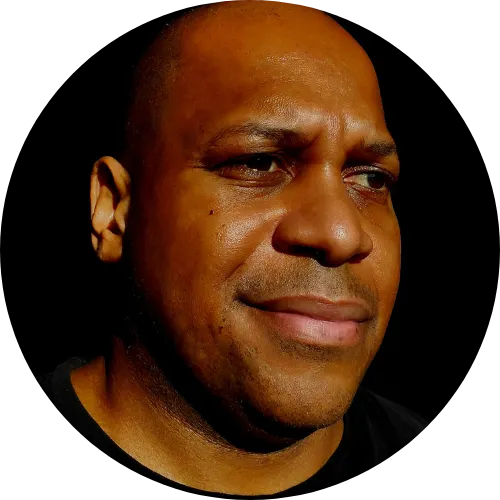
Alan Loyd
Advocate
Driven by a passion for personal and professional growth, I joined Freedom Financial to empower others. With a psychology background and coaching experience, I excel at connecting with people, simplifying concepts, and inspiring action. Combining empathy and evidence-based strategies, I help individuals overcome obstacles and achieve their goals. I’m proud to support Freedom Financial’s vision of a world where everyone can grow and thrive.

Reginald Wiley
Advocate
I chose this position because of the opportunity to serve others. I’ve worked with the SBA Disaster Center & FEMA and developed a strong work ethic based on empathy and compassion for people in a time of need.

Read Our Newest Blogs

The Unacceptable Reflection: How Confronting Your Past Creates Unshakeable Self-Discipline
"Your visions will become clear only when you can look into your own heart. Who looks outside, dreams; who looks inside, awakes."
– Carl Jung
The pursuit of success is often framed as a quest for external tools, a new morning routine, or a complicated productivity system. We seek the perfect app or the ultimate planner, believing that better organization is the key to finally achieving our goals. But self-discipline, the true engine of success, is rarely about the doing; it’s about the being—specifically, the willingness to confront the person you are right now and make a deep, non-negotiable decision to change.
True, lasting discipline is not a sudden burst of willpower; it’s a long, sustained commitment fueled by a simple, profound truth: your current life is no longer acceptable.
This article is your guide to digging deep, examining the foundations of your current reality, and using that clarity to forge the unshakeable self-discipline required for genuine success in your personal, professional, and financial life. The path begins not with a bold new action, but with quiet, uncomfortable reflection.
The Power of the Pain Point: Confronting Your Status Quo
To truly change, you must first stop apologizing for, justifying, or simply tolerating where you are.
The simple, powerful prompt you must answer is: Remind yourself how you got here.
This is not an exercise in self-pity or blame. It is an act of brutal, compassionate honesty. You are attempting to improve this part of your life—be it health, finances, or career trajectory—because your current life and current habits have become unacceptable. The way things have turned out is not where you want to be, and critically, you are not the person you want to be.
The motivation to change comes not from the distant, hazy dream of a perfect future, but from the immediate, tangible pain of the present. Every habit, good or bad, is a choice. Your current reality—the debt, the stagnant career, the compromised health—is a direct, undeniable result of your previous choices and, specifically, your lack of self-discipline in certain moments.
Acknowledge this:
In your professional life, you got here because you prioritized short-term comfort (scrolling social media, taking long lunches) over difficult, long-term actions (deep work, skill acquisition, networking).
In your financial life, you got here because you prioritized instant gratification (unnecessary purchases, emotional spending) over delayed gratification (saving, investing, budgeting).
In your personal life, you got here because you prioritized ease (processed food, sitting on the couch) over effort (exercise, meal prepping, difficult conversations).
When the motivation to get up early fails, remind yourself of the exact moment you decided you’d had enough of the status quo. That moment of dissatisfaction is your most reliable fuel. It creates the urgency necessary to sustain the hard work ahead. The goal is to make the pain of staying the same greater than the pain of changing.
The Blueprint of the Ideal Self: Defining Who You Will Become
Once you have clarity on what you are leaving behind, you need equally powerful clarity on what you are moving toward. This step transforms vague desires into a tangible identity.
Ask yourself what kind of person you want to become.
Self-discipline is less about forcing yourself to do things and more about acting as the person you already wish to be. If you want financial success, you don't just do financially successful things; you start acting as a financially responsible person. This shift in identity is everything.
There is rarely a "huge change" required to embody that new person. More often than not, the change is focused on a specific, targeted area—an incremental adjustment to your core identity.
For example, instead of saying: "I need to have more self-discipline," reframe your identity:
The disciplined person is a proactive communicator in business, not a passive email-checker.
The disciplined person is a steward of their health, not someone who eats whatever is easiest.
The disciplined person is an intentional saver, not someone who spends what is left over.
This deep dive requires you to pinpoint the exact locations where your self-discipline is currently lacking. Where is the gap between the person you are and the person you want to become?
Job/Career: Do you lack the discipline to dedicate an hour every day to learning a new, necessary skill?
Health: Do you lack the discipline to consistently choose water over sugary drinks, or prioritize sleep over late-night scrolling?
Relationships: Do you lack the discipline to listen actively without interrupting, or to schedule dedicated quality time?
By defining the traits and habits of the person you aspire to be, you create a clear standard that your daily actions must either meet or fail to meet. This clarity removes indecision, which is a primary killer of self-discipline.
Mapping the Change: Strengths, Weaknesses, and Conscious Acceptance
The idea that you need to tear down your entire life and start fresh is overwhelming and often paralyzing. The most sustainable change is usually incremental. To make smart, incremental changes, you must first audit your current self for existing evidence of discipline and areas of systemic weakness.
Where are your current strengths, and where are your current weaknesses?
It's tempting to focus only on the failures, but doing so ignores the fact that you already exhibit tremendous discipline in some areas. Perhaps you are always on time for work (a strength), but you lack the discipline to put your phone away at dinner (a weakness). Recognizing your existing strengths provides confidence and a template—if you can be disciplined in this area, you can transfer that framework to that area.
Once you have audited yourself, you can set targeted goals. If you don’t need to change completely, then what are your incremental goals?
Discipline does not require perfection, only direction. Incremental goals follow the "Goldilocks Rule": they should be challenging enough to be motivating, but not so challenging that they invite burnout and failure.
This also requires a mature understanding of conscious acceptance: how much of where you are now is okay?
Acceptance of Pace: It’s okay if your financial goal takes five years instead of three, provided you are disciplined in making your monthly contributions.
Acceptance of Effort: It’s okay if you only spend 30 minutes on a side project instead of two hours, provided those 30 minutes are focused, undistracted, and fully present.
Conscious acceptance is about determining the standard you are willing to uphold, even on an off day. It helps you avoid the "all-or-nothing" trap, where one slip-up leads to the total abandonment of your self-discipline commitment.
The Unwavering Resolution: Committing to the Non-Negotiables
This is the most crucial step: moving from the intellectual agreement that change is needed to an absolute, emotional, and practical resolution that change will happen.
Most importantly, ask yourself what you refuse to keep. What parts of your current life are you adamantly not willing to continue?
This must be a moment of moral clarity, not just a preference. It’s the difference between "I’d like to stop wasting money" (a preference) and "I refuse to accumulate any more consumer debt, ever again" (a resolution).
When you shift from a desire to a refusal, you create an internal non-negotiable boundary. This boundary transforms a soft goal (which can be easily rationalized away) into a hard value. When temptation arises—the urge to buy the unnecessary item, to skip the workout, or to hit snooze—you aren't debating a goal; you are defending a value.
How resolved are you to affect the change? The answer is measured by your plan for failure.
Discipline is not about never failing; it's about the speed of your return to the chosen path. The true test of your resolution is knowing what you will do when you go back to the old patterns of behavior.
The Relapse Strategy:
Financial Failure: If you overspend by $100, your old pattern was to give up entirely. Your new resolved pattern is to immediately cut that $100 from the following week’s discretionary budget and review the purchase to understand the emotional trigger.
Health Failure: If you miss two planned workouts, your old pattern was to quit for a month. Your new resolved pattern is to put on your workout clothes immediately and do a 10-minute session—just enough to reinforce the identity of "a person who does not miss a third workout."
This preemptive planning—knowing exactly how you will handle the moment you fail—is the ultimate expression of self-discipline. It inoculates you against the shame spiral that leads to long-term abandonment.
Dig Deep: The Solid Commitment is the Foundation
The entire process culminates in the final, foundational step: Dig deep.
If you can start the change with a solid commitment, then you’re much more likely to continue when things get difficult.
A solid commitment is rooted in self-knowledge derived from the previous steps. It’s not a vague, hopeful promise; it’s an oath to your future self, forged in the pain of your past self, and guided by the blueprint of your ideal self.
To solidify this commitment, you must ensure it hits three critical markers:
It Must Be Specific: Define the one core non-negotiable action (e.g., "I will save 10% of every paycheck").
It Must Be Public (Optional but Powerful): Tell a trusted friend, colleague, or mentor. Social accountability significantly boosts adherence.
It Must Be Tied to Identity: Frame the commitment as a defining characteristic. "I am the type of professional who delivers all projects ahead of deadline," not "I need to meet deadlines."
The path to success through self-discipline is simply the path of consistently choosing the hard right over the easy wrong. But that choice only becomes automatic when it is backed by an unwavering resolution—a deep, visceral knowledge that the unacceptable life is truly in the past, and the person you are becoming is worth the temporary discomfort of effort. Start the reflection today, and you will find the reservoir of discipline you didn’t know you possessed.
Comments:

© 2025 Larsen Family Enterprises Group dba Freedom Financial Services - All Rights Reserved, Published in the United States of America
Contact


