

About Us
Who is Freedom Financial Services?
Our company is a proud partner of Larsen Family Enterprises Group, marketplace of independent businesses dedicated to the shared mission to, empower those we serve to create their personal vision of a "Thriving Successfully i" life.
Freedom Financial Services is committed to the belief that every person has the rightb5o create financial freedom and we empower our clients to create the success they desire by providing training and coaching , as well as access to products and services that will help them achieve their goals.
Our values promote independence and sef-reliance. The Services we provide are focused on promoting these values for our clients. We do not supply "pre-determined" and "done for you" plans and packages of Services that restrict the options available to our clients. Instead, we focus on finding options and opportunities that uniquely meet the individual needs and desires of the people we serve, providing training and support to empower them to monitor, maintain and grow wealth and success for their family.
Book a Free Call to Discuss how We can empower you to achieve your dreams!
Meet Our Team

Jeanette Larsen
Executive Director

Jeanette’s passion for empowering others to create thriving, successful lives drives Larsen Family Enterprises. She believes real success comes from empowering others while committing to personal growth and excellence. Through leading by example, Jeanette inspires others to achieve their goals, leaving a lasting legacy of success and empowerment.

Tricia White
Advocate/Educator
Tricia has an extensive Professional and Management background in finance and business with years of experience working with kids in Junior Achievement helping them learn the skills leading to success.
Tricia brings her business expertise and love for working with kids to Larsen Family Enterprises Group & its partners to support and empower our clients & their kids to create their thriving successfully lives.
Hear From Our Clients
We offer financial
wings to let your
dreams soar higher
Lorem ipsum dolor sit amet, consectetur adipiscing elit. Quisque nisi nunc, tincidunt non nibh non, ullamcorper facilisis lectus. Sed accumsan metus viverra turpis faucibus, id elementum tellus suscipit. Duis ac dolor nec odio fermentum

Ricardo Novoa
Advocate
Ricardo Novoa is an IT professional with 30+ years of experience across industries like banking, healthcare, retail, and utilities. He specializes in developing innovative IT solutions that boost efficiency, cut costs, and drive profitability.
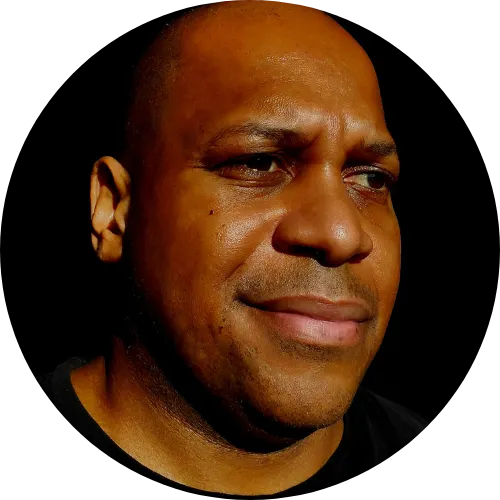
Alan Loyd
Advocate
Driven by a passion for personal and professional growth, I joined Freedom Financial to empower others. With a psychology background and coaching experience, I excel at connecting with people, simplifying concepts, and inspiring action. Combining empathy and evidence-based strategies, I help individuals overcome obstacles and achieve their goals. I’m proud to support Freedom Financial’s vision of a world where everyone can grow and thrive.

Reginald Wiley
Advocate
I chose this position because of the opportunity to serve others. I’ve worked with the SBA Disaster Center & FEMA and developed a strong work ethic based on empathy and compassion for people in a time of need.

Read Our Newest Blogs

The Core of Commitment: Why Your "Why" is the Fuel for Self-Discipline
"The great master key to riches is nothing more or less than the self-discipline necessary to help you take the full and complete possession of your own mind". --Napoleon Hill
Introduction: The Engine of Success and Its Essential Fuel
We all admire self-discipline. It's the hallmark of high-achievers, the quiet strength that turns aspirations into achievements. We see it in the early riser, the dedicated student, the savvy investor, and the relentless entrepreneur. Yet, for most people, discipline is a constant, grinding battle—a draining process of willpower that inevitably fails when fatigue sets in. We often approach self-discipline like a high-maintenance engine that requires constant, exhausting effort to run.
But what if self-discipline wasn't about the effort? What if it was about the fuel?
The truth is, true, sustainable self-discipline thrives not on willpower, but on purpose. It doesn't need to be a struggle if you connect it to an emotional and intellectual anchor that is stronger than any momentary desire. That anchor is your "Why."
When you have a deeply compelling reason behind your actions—a "Why" that resonates to your very core—the decisions become easy, and the effort becomes secondary. This article will show you how to discover, articulate, and harness the immense power of your "Why" to create the unwavering self-discipline required to transform your personal, professional, financial, and business success. Stop asking, "How do I become more disciplined?" and start asking, "Why am I doing this?"
Section 1: Decoding the Two Architectures of "Why"
Generally speaking, there are two fundamental psychological drivers for cultivating self-discipline, and it’s critical to understand which one is driving you at any given moment. These two drivers are Motivation (The Avoidance Why) and Inspiration (The Aspirational Why).
1. Motivation: The Avoidance Why (Fleeing Pain)
This form of "Why" is rooted in necessity, fear, or the desire to avoid pain, loss, or negative consequence. It is highly effective because the alternative is unacceptable.
Consider the person who had a severe health scare. A heart attack survivor, for instance, might be intensely motivated to become healthier, to eat better, and to exercise daily. Their "Why" isn't a vague desire for fitness; it’s a visceral commitment to avoid dying young or repeating the trauma of the hospital. The pain of discipline (skipping dessert, waking up early) is instantly dwarfed by the pain of inaction (illness, regret, loss of life).
This "Why" often emerges from crises:
Financial life: Getting out of crushing debt to avoid constant anxiety and calls from collection agencies.
Professional life: Mastering a new skill to avoid being laid off or falling behind industry standards.
Personal life: Setting boundaries to avoid burnout and preserve mental health.
The Avoidance Why acts as an emergency response system. It provides powerful, often instant short-term discipline because the stakes are immediate and high. While you shouldn't wait for a crisis to define your discipline, recognizing and confronting your potential negative future is an incredibly powerful tool for initial behavioral change.
2. Inspiration: The Aspirational Why (Moving Toward Gain)
This form of "Why" is rooted in positive vision, deep desire, and the commitment to achieve a higher state or goal. It is the force of attraction that pulls you forward.
If you look up to a colleague who just launched a wildly successful side business, you might be inspired by that success to study harder, network more strategically, or start building your own venture. Your "Why" is the future state—the freedom, the impact, the legacy—you are striving toward.
This "Why" fuels sustainable, long-term growth:
Financial life: Disciplined saving to buy a specific dream home or achieve financial independence by a certain age.
Professional life: Consistently pursuing professional development to earn a C-suite role and shape the future of the industry.
Personal life: Practicing meditation and reading to cultivate a specific quality of life and deeper sense of peace.
The Aspirational Why is the source of long-term resilience. When the initial pain of a crisis fades, the Aspirational Why keeps you moving, providing a compelling vision that makes the inevitable setbacks feel temporary and minor. For lasting success, your discipline needs a blend of both: the motivation to escape the past and the inspiration to build the future.
Section 2: The Quantum Shift: "Wanting It Badly Enough"
Someone once said that if you want it badly enough, there is nothing that can stop you. Conversely, if you don’t want it badly enough, there’s nothing that will make it happen.
This isn't just a motivational platitude; it's a statement on the hierarchy of values and the psychology of execution. Self-discipline is merely the action that aligns with your highest value. When your "Why" is not merely a preference but a non-negotiable necessity, your decision-making framework completely changes.
The Contrast in Commitment
Imagine two people wanting to get fitter:
Person A (Vague Wish)Person B (Compelling Why)
Goal: "I want to lose weight."
Goal: "I will drop 40 pounds to lower my blood pressure so I can be active and healthy enough to take my daughter hiking in Patagonia next year."
Commitment Level: Moderate. “I'll go to the gym if I have time.”
Commitment Level: Necessary. “I must train today, or I risk failing the hike and jeopardizing my health.”
Response to Challenge (e.g., Rain, Tiredness): “I guess I'll just skip today.”
Response to Challenge (e.g., Rain, Tiredness): “The rain is annoying, but it's less painful than telling my daughter I can't climb the mountain with her.”
The difference lies in the clarity and emotional weight of the "Why." Person B's purpose is tied to a specific outcome, a deeper identity (a healthy parent), and an emotional relationship (the daughter). This "Why" acts as a form of emotional momentum, consistently overriding the brain’s natural tendency toward comfort and instant gratification. This is the power of purpose—it transforms the must-do into a get-to-do.
Section 3: Mapping Your "Why" Across the Four Pillars of Success
A powerful "Why" must be integrated into every major area of your life to drive truly holistic success. If your professional "Why" is strong but your financial "Why" is weak, your discipline will crumble under the weight of debt or insecurity.
1. The Personal "Why": Longevity and Identity
Your personal life is the foundation. Discipline here dictates your energy, health, and mental state.
The Question: Why do I want to be healthy, calm, and present?
A Weak Answer: To look good.
A Strong Answer: To live long enough to play with my great-grandchildren and remain sharp and independent in my old age. My “Why” is the legacy of health I want to model for my family and the joy of experiencing life to its fullest, unhindered by illness. This drives the daily discipline of nutrition, sleep, and self-care.
2. The Professional "Why": Impact and Mastery
Professional self-discipline is rarely about the paycheck; it’s about the desire to excel and contribute.
The Question: Why do I put in the extra hours, take the difficult course, or seek challenging projects?
A Weak Answer: To get a raise.
A Strong Answer: To become the undisputed expert in my niche so I can solve the single biggest problem facing my industry. My “Why” is the pride of mastery and the sense of impact that my unique contribution delivers. This inspires the discipline to constantly learn, seek feedback, and refine skills.
3. The Financial "Why": Freedom and Security
Financial discipline is the hardest for many because the rewards feel abstract or too far away. Your "Why" must make those future rewards tangible.
The Question: Why am I sacrificing today's spending for tomorrow's savings?
A Weak Answer: To be rich.
A Strong Answer: To build a financial fortress that guarantees my family will never face hardship, and to generate the passive income necessary to choose how I spend my time—not based on an employer's schedule, but based on my own freedom and values. This transforms budgeting from deprivation into strategic liberation.
4. The Business "Why": Purpose and Problem-Solving
For entrepreneurs, the "Why" must transcend profit and tap into the core mission. This is what sustains you through the inevitable chaos of building a company.
The Question: Why does this product or service need to exist?
A Weak Answer: To make money.
A Strong Answer: My business exists to eliminate waste in the supply chain, creating a more sustainable planet for everyone. My "Why" is solving a deep societal or market problem that impacts millions of lives. This purpose fuels the discipline needed to manage cash flow, endure product failures, and motivate a team when success seems distant.
Section 4: The Strategic Use of Reminders and Mementos
It is guaranteed that your energy will flag. There will be days when the bed is too warm, the market is too volatile, and the project is too hard. This is the moment when the "Why" must move from a concept in your mind to a physical presence in your world.
This is where you keep reminders of that purpose everywhere. Look back to these mementos when the internal dialogue shifts from "I can" to "I can't" or "I don't want to."
Practical Reminders for Unwavering Discipline:
Vision Board/Digital Desktop: A simple collage or digital background showing pictures related to your "Why"—the hiking trail in Patagonia, the floor plan of the dream home, or the faces of the people your business serves.
The "Why" Journal: At the start of every challenging task or week, write down the three most compelling reasons why you are doing this. Re-reading this prevents the brain from losing sight of the goal in favor of instant gratification.
Physical Mementos: Carry something that symbolizes your struggle or your goal. A small stone to remind you of your health scare, a laminated quote, or a key to an apartment you are saving for.
Scheduled Review: Set a recurring calendar reminder to review your "Why" for each life domain (personal, professional, financial, business) every Sunday evening. Discipline is a habit, but purpose is a strategy that must be routinely checked and reinforced.
By intentionally placing your "Why" front and center—in your office, on your phone, and in your daily routine—you create an external scaffold that supports your internal commitment. It’s a constant, gentle nudge back to the path when momentary weakness tries to pull you off course.
Conclusion: Activating the Unstoppable Force
Self-discipline is not a natural talent; it is a skill powered by a clear, emotional, and powerful Why.
If you look at any sustained achievement—from mastering an instrument to building a global company—you will find a person who simply wanted it badly enough to endure the long, tedious, and often discouraging middle part of the journey. Their desire was not a casual wish; it was a fire.
Your self-discipline problems are rarely matters of weakness; they are matters of unclarity. When the target is fuzzy, the arrow falls short. When the target is sharp, compelling, and non-negotiable, the arrow flies true.
Take the time, today, to clarify your own "Why." Define the pain you are running from and the future you are running toward. When your reason for change is powerful enough, when you keep your "Why" to the front of your mind, you stop relying on fickle motivation and start operating with an unstoppable, disciplined commitment.
Comments:

© 2025 Larsen Family Enterprises Group dba Freedom Financial Services - All Rights Reserved, Published in the United States of America
Contact


