

About Us
Who is Freedom Financial Services?
Our company is a proud partner of Larsen Family Enterprises Group, marketplace of independent businesses dedicated to the shared mission to, empower those we serve to create their personal vision of a "Thriving Successfully i" life.
Freedom Financial Services is committed to the belief that every person has the rightb5o create financial freedom and we empower our clients to create the success they desire by providing training and coaching , as well as access to products and services that will help them achieve their goals.
Our values promote independence and sef-reliance. The Services we provide are focused on promoting these values for our clients. We do not supply "pre-determined" and "done for you" plans and packages of Services that restrict the options available to our clients. Instead, we focus on finding options and opportunities that uniquely meet the individual needs and desires of the people we serve, providing training and support to empower them to monitor, maintain and grow wealth and success for their family.
Book a Free Call to Discuss how We can empower you to achieve your dreams!
Meet Our Team

Jeanette Larsen
Executive Director

Jeanette’s passion for empowering others to create thriving, successful lives drives Larsen Family Enterprises. She believes real success comes from empowering others while committing to personal growth and excellence. Through leading by example, Jeanette inspires others to achieve their goals, leaving a lasting legacy of success and empowerment.

Tricia White
Advocate/Educator
Tricia has an extensive Professional and Management background in finance and business with years of experience working with kids in Junior Achievement helping them learn the skills leading to success.
Tricia brings her business expertise and love for working with kids to Larsen Family Enterprises Group & its partners to support and empower our clients & their kids to create their thriving successfully lives.
Hear From Our Clients
We offer financial
wings to let your
dreams soar higher
Lorem ipsum dolor sit amet, consectetur adipiscing elit. Quisque nisi nunc, tincidunt non nibh non, ullamcorper facilisis lectus. Sed accumsan metus viverra turpis faucibus, id elementum tellus suscipit. Duis ac dolor nec odio fermentum

Ricardo Novoa
Advocate
Ricardo Novoa is an IT professional with 30+ years of experience across industries like banking, healthcare, retail, and utilities. He specializes in developing innovative IT solutions that boost efficiency, cut costs, and drive profitability.
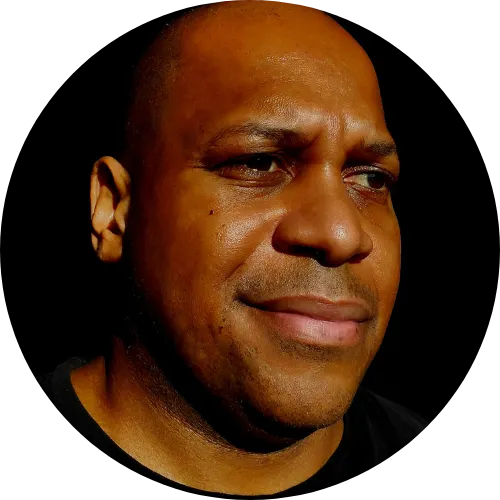
Alan Loyd
Advocate
Driven by a passion for personal and professional growth, I joined Freedom Financial to empower others. With a psychology background and coaching experience, I excel at connecting with people, simplifying concepts, and inspiring action. Combining empathy and evidence-based strategies, I help individuals overcome obstacles and achieve their goals. I’m proud to support Freedom Financial’s vision of a world where everyone can grow and thrive.

Reginald Wiley
Advocate
I chose this position because of the opportunity to serve others. I’ve worked with the SBA Disaster Center & FEMA and developed a strong work ethic based on empathy and compassion for people in a time of need.

Read Our Newest Blogs

The Growth Mindset Mandate: Finding Successful Work in the 2025 Job Market
What is the recipe for successful achievement? To my mind there are just four essential ingredients: Choose a career you love, give it the best there is in you, seize your opportunities, and be a member of the team. -- Benjamin F. Fairless
The transition into the mid-2020s has brought about a seismic shift in the nature of employment. The Job Market 2025 is characterized by relentless technological integration, primarily driven by artificial intelligence (AI), coupled with an unprecedented focus on skills, agility, and performance over static credentials. In this volatile, opportunity-rich environment, an individual’s technical aptitude, education, and experience matter less than their most crucial asset: their mindset. The difference between securing Career Success and facing long-term professional stagnation hinges on the adoption of a genuine Growth Mindset—a willingness to pivot, learn, and demonstrate quantifiable value.
For professionals navigating this landscape, the core challenge is not a lack of jobs, but a mismatch between outdated beliefs and the realities of the Future of Work. This article explores the specific ways a person’s mindset affects their ability to find and thrive in successful work, addressing psychological barriers, the necessary shift in professional attitudes, and the critical acceptance of non-traditional compensation models.
The Trap of Fixed Thinking: Overcoming Locked-in Beliefs
Many job seekers and established professionals carry a “fixed mindset” into the 2025 job search, believing their abilities and career trajectory are static. This locked-in thinking is a primary inhibitor of

Career Success in the modern job economy.
Resisting New Positions and Work Activities
A fixed mindset often manifests as deeply ingrained resistance to positions that don't precisely match a historical job title or a narrow, preferred list of work activities. Professionals locked into titles like "Marketing Manager" or "Financial Analyst" may automatically filter out roles labeled "Growth Strategist" or "Data Storyteller," despite the core competencies being identical. This rigid adherence to past self-identification is detrimental in a Job Market 2025 that is rapidly embracing skills-based hiring. Employers today are not just hiring job titles; they are hiring dynamic skill stacks—a blend of technical prowess, creative problem-solving, and adaptability.
To achieve Career Success, the modern professional must practice a skills-based hiring mindset. Instead of asking, "Is this the job I had before?" they must ask, "Does this role allow me to deploy my core skills—communication, analysis, project management, etc.—in a new and high-value way?" The open-minded willingness to consider non-traditional roles, even if they involve learning new adjacent skills or taking on work activities that are slightly outside the comfort zone, is what separates the thriving from the struggling.
The Pitfall of Entitlement and Unjustified Salary Requirements
Perhaps the most significant challenge to a successful job search is the belief in inherited professional worth, often termed professional entitlement. This attitude frequently surfaces in demands for specific salary requirements without a commensurate demonstration of current, market-relevant value.
The modern Future of Work is moving away from rewarding tenure and towards rewarding measurable, demonstrable outcomes. The statement, “I require a salary of $150,000 because I have fifteen years of experience,” is being replaced by, “I can demonstrate a history of generating $500,000 in revenue per year, and I seek compensation proportional to that value.”
Avoiding career entitlement requires a fundamental shift in perspective regarding Workplace Adaptability. It means recognizing that an employer is not purchasing a person’s past—they are investing in a projected return on investment (ROI) based on future output. If an individual is unwilling to embrace new technologies (like AI or automation) that increase efficiency, or if they resist learning new collaborative work patterns, their perceived market value, and thus their justified salary, will inevitably decrease, regardless of their past title or pay.
Overcoming the Psychological Roadblocks to Career Success
The mindset affects job success not just in how one applies for roles, but in the psychological readiness to embrace risk and change. Fixed mindsets breed fear, insecurity, and a pervasive lack of

Workplace Adaptability.
Lack of Confidence and the Fear of Newness
Job hunting anxiety is rampant in the Job Market 2025, but it is compounded exponentially by a fixed mindset. Professionals suffering from a lack of confidence often fall into a cyclical trap: they fear trying new work patterns or learning new technology because they fear failure, which confirms their fixed belief that they lack the inherent ability to change. This fear of trying something new leads to stagnation.
The modern professional must understand that the Growth Mindset dictates that competence is built through effort and learning, not inherited talent. Taking on a new role or mastering a new platform like Generative AI should not be viewed as a high-stakes test, but as a low-stakes opportunity for professional development. Successful candidates are those who confidently articulate their ability to rapidly acquire new skills, focusing on their process of learning rather than their current mastery.
Fear of Scams, Lack of Trust, and Coachability
In a rapidly changing landscape, there is a legitimate fear of being scammed by new, unproven business models or non-traditional contract work. However, this fear often extends into blanket cynicism about innovative or outside-of-the-comfort-zone ideas. This manifests as resistance to anything that isn't a traditional 9-to-5, salaried position with fixed benefits.
Furthermore, a lack of coachability—the inability to accept constructive feedback—is a severe impediment to Career Success. A fixed mindset views criticism as a reflection of inherent lack of ability, triggering defensiveness.
Fixed Mindset Response: "My method worked for fifteen years; the employer is wrong to suggest I change."
Growth Mindset Response: "I appreciate the feedback on optimizing my workflow; how can I adapt my existing skills to meet this new production standard?"
Successful navigation of the Future of Work requires professionals to be discerning but not dismissive. They must trust that the employer is not always looking to “scam” them, but rather to optimize their operational model. Being coachable and embracing continuous feedback is the simplest way to prove value and secure investment from an employer.
Embracing the Growth Mindset: Adaptability and Continuous Learning
The core theme of the successful Job Market 2025 mindset is relentless, proactive adaptation. It is the belief that one’s talents and intelligence can be developed through dedication and hard work,

which fuels the willingness to engage with the modern workplace’s two key demands: technology and complexity.
Willingness to Learn New Technology and Work Patterns
The rate of technological obsolescence is accelerating. For example, understanding Generative AI and automation tools is quickly transitioning from a desirable skill to a foundational literacy requirement, regardless of industry. A Growth Mindset professional views the time spent mastering new technology as a long-term investment, not a frustrating hurdle.
This also extends to new work patterns. The shift towards agile methodologies, collaborative platforms, and hyper-flexible, often asynchronous work models requires professionals to rethink traditional definitions of productivity and teamwork. Workplace Adaptability means being comfortable with ambiguity, managing one's own time effectively in a remote or hybrid environment, and consistently demonstrating accountability without direct supervision. Individuals who cling to legacy tools or command-and-control structures will quickly be deemed low-value assets.
Taking on New Challenges with New Roles
The average professional today will have several careers, not just several jobs. Career Success is no longer a linear climb up a corporate ladder but a lattice of horizontal and vertical moves. The willingness to take on new challenges with new roles, even those that appear lateral or temporary, builds an indispensable skill-stack diversification that hedges against future economic volatility.
This proactive approach is the essence of a skills-based hiring mindset. A professional with a Growth Mindset proactively seeks out opportunities to manage cross-functional projects, lead training sessions on new software, or bridge communication gaps between departments, understanding that these new challenges develop resilience and make them an invaluable asset in the modern job economy.
Navigating the New Financial Reality: Compensation Based on Value
Perhaps the most challenging mindset affects job success hurdle is the acceptance of evolving

compensation structures. The traditional model of fixed salary or fixed hourly wages, which essentially compensated for time spent, is yielding to models that compensate for value delivered.
The Shift to Production-Based Pay
The Future of Work is increasingly embracing production-based pay and value-based compensation. This trend is driven by two factors:
Remote Work & Autonomy: When employees are trusted with greater flexibility and autonomy, compensation must correlate with measurable output rather than hours logged.
Measurable Outcomes: Technology allows employers to track productivity, quality, and direct contributions to revenue with unprecedented accuracy.
In fields ranging from sales and consulting to healthcare (where value-based care models tie provider compensation to patient outcomes) and even creative design (paid per project completion or KPI attainment), a greater portion of an employee's total compensation is becoming variable. This includes commission, bonuses tied to corporate performance, profit-sharing, or project milestones.
Accepting Non-Traditional Compensation Models
For many, this shift is destabilizing. It requires accepting a certain degree of risk that the fixed salary structure never demanded. However, the Growth Mindset sees this as an enormous opportunity: the potential reward is uncapped, tied directly to the value an individual creates, rather than limited by a pre-defined budget.
To succeed with non-traditional compensation models, candidates must:
Become Value Articulators: Learn to speak fluently about their impact using metrics and data (e.g., "I reduced operational costs by $X" or "I improved client retention by Y%").
Embrace Shared Risk/Reward: Understand that accepting a lower base salary in exchange for higher performance incentives reflects a partnership between employee and employer—a mutual belief in the employee's ability to drive results.
Negotiate Metrics: Focus the compensation discussion not just on the dollar amount, but on the fairness and clarity of the performance metrics. If the metrics are transparent and achievable, the financial success is largely within the individual’s control.
The rejection of this trend—the insistence on a high, fixed salary simply because "that's what I've always earned"—is a form of avoiding career entitlement that guarantees missed opportunities in the modern job economy.
Conclusion: The Adaptive Professional
In the rapidly accelerating Job Market 2025, the difference between a stalled career and sustained Career Success is primarily a difference in mindset. The fixed perspective—the fear, the entitlement,

the resistance to new methods—is a professional liability that technology and market forces are actively weeding out.
The successful professional of today is the Adaptive Professional of tomorrow. They are defined by their Growth Mindset: they prioritize Workplace Adaptability, embrace continuous learning about new technology and work patterns, willingly take on new challenges with new roles, and confidently engage with non-traditional compensation models because they trust their ability to deliver measurable, quantifiable value.
Your mindset is the most powerful tool in your career toolkit. Sharpen it, challenge its fixed assumptions, and commit to the relentless pursuit of learning. By doing so, you will not just survive the Future of Work—you will define it.
Comments:

© 2025 Larsen Family Enterprises Group dba Freedom Financial Services - All Rights Reserved, Published in the United States of America
Contact


