

About Us
Who is Freedom Financial Services?
Our company is a proud partner of Larsen Family Enterprises Group, marketplace of independent businesses dedicated to the shared mission to, empower those we serve to create their personal vision of a "Thriving Successfully i" life.
Freedom Financial Services is committed to the belief that every person has the rightb5o create financial freedom and we empower our clients to create the success they desire by providing training and coaching , as well as access to products and services that will help them achieve their goals.
Our values promote independence and sef-reliance. The Services we provide are focused on promoting these values for our clients. We do not supply "pre-determined" and "done for you" plans and packages of Services that restrict the options available to our clients. Instead, we focus on finding options and opportunities that uniquely meet the individual needs and desires of the people we serve, providing training and support to empower them to monitor, maintain and grow wealth and success for their family.
Book a Free Call to Discuss how We can empower you to achieve your dreams!
Meet Our Team

Jeanette Larsen
Executive Director

Jeanette’s passion for empowering others to create thriving, successful lives drives Larsen Family Enterprises. She believes real success comes from empowering others while committing to personal growth and excellence. Through leading by example, Jeanette inspires others to achieve their goals, leaving a lasting legacy of success and empowerment.

Tricia White
Advocate/Educator
Tricia has an extensive Professional and Management background in finance and business with years of experience working with kids in Junior Achievement helping them learn the skills leading to success.
Tricia brings her business expertise and love for working with kids to Larsen Family Enterprises Group & its partners to support and empower our clients & their kids to create their thriving successfully lives.
Hear From Our Clients
We offer financial
wings to let your
dreams soar higher
Lorem ipsum dolor sit amet, consectetur adipiscing elit. Quisque nisi nunc, tincidunt non nibh non, ullamcorper facilisis lectus. Sed accumsan metus viverra turpis faucibus, id elementum tellus suscipit. Duis ac dolor nec odio fermentum

Ricardo Novoa
Advocate
Ricardo Novoa is an IT professional with 30+ years of experience across industries like banking, healthcare, retail, and utilities. He specializes in developing innovative IT solutions that boost efficiency, cut costs, and drive profitability.
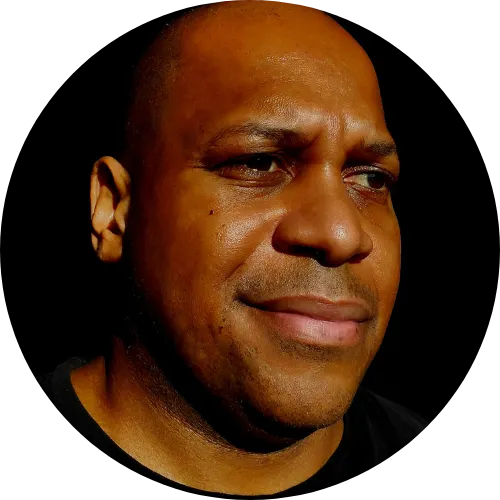
Alan Loyd
Advocate
Driven by a passion for personal and professional growth, I joined Freedom Financial to empower others. With a psychology background and coaching experience, I excel at connecting with people, simplifying concepts, and inspiring action. Combining empathy and evidence-based strategies, I help individuals overcome obstacles and achieve their goals. I’m proud to support Freedom Financial’s vision of a world where everyone can grow and thrive.

Reginald Wiley
Advocate
I chose this position because of the opportunity to serve others. I’ve worked with the SBA Disaster Center & FEMA and developed a strong work ethic based on empathy and compassion for people in a time of need.

Read Our Newest Blogs

From Numbers Game to Skills Game: Mastering the First 90 Seconds
"If the World is Cold, Make it Your Business to Build Fires" --Horace Traubel
Every sales organization faces the same frustrating paradox: highly skilled representatives and rookies often use the exact same scripts, yet their results vary wildly. If everyone is saying the same thing to the same type of outbound leads, why do some salespeople consistently close deals while others struggle? The difference isn't the script itself; it’s the skills game—the mastery of sales psychology and communication that instantly disarms a prospect.
The old way of contacting a lead—the "numbers game"—requires you to cycle through countless prospects, hoping to stumble upon a laydown sale. The right way, based on the Neuro-Emotional Persuasion Questioning (NEPQ) framework, drastically reduces that volume by eliminating sales resistance right at the outset.
This guide provides a comprehensive framework, rooted in behavioral science, to help both new and experienced sales reps transition from sounding like a predictable telemarketer to a trusted expert. You'll learn the three crucial NEPQ connection questions that cause prospects to drop their guard, open up, and, most importantly, start qualifying themselves to you.
The Predictable Pitfalls: Why Your Current Opener Fails
To understand how to succeed, we must first analyze why the average outbound call triggers the instant “not interested” response. Most traditional scripts are riddled with predictable questions and poor tonality that immediately activate the prospect’s primal defense mechanism.
The Trigger: Tonality and the Survival Mechanism
Every human being has built-in survival mechanisms—often referred to as the “Spidey senses” or the reptilian part of the brain. When a prospect answers the phone, this survival mechanism is listening for cues that indicate they are about to be sold something.
The average salesperson makes one of two fatal tonality errors:
Way Too Excited: The voice is too high-pitched and enthusiastic (e.g., “Hey Annie! It’s James Miller with XYZ company!”). This screams: “I need your money!” and causes the prospect to instantly feel pressured.
Monotone Robot: The voice is flat and unengaged, sounding exactly like a generic telemarketer. This is perhaps worse, as it signals a lack of authenticity and expertise.
Any tonality that sounds timid, overly aggressive, or overly enthusiastic instantly triggers a sales resistance reaction, leading to excuses like, “I’m too busy,” or, “I don’t remember doing that.” An expert’s tone must be collected, confident, and calm—a tone that suggests, "I don't need your business, but I can solve your problem."
The Fatal Flaws of Predictable Questions
Standard openers don't just sound bad; their predictable content breeds mistrust:
“I saw you requested information about our products/services…” This focuses on your solution, not their problem. Your goal should be to focus on the result of your solution, not the mechanics of it.
“Is this a good time to talk?” or “Do you have two minutes?” Asking if it’s a good time gives the prospect an easy "out." Promising only "two minutes" when they know you need more instantly erodes trust and makes you appear dishonest, lowering your status in their mind.
“How are you doing today?” While polite, the prospect knows a salesperson is not genuinely interested in their day. They perceive this as a transparent attempt to build rapport, which instantly causes their guard to go up.
The Numbers Game Trap: Falling into Chase Mode
When a prospect says, “I’m busy, call me back later,” the average salesperson agrees, instantly entering chase mode. By saying, “Sure, when works best for you?” you are buying into their excuse and qualifying to the prospect.
You must remember: The prospect has the problem, not you. You are the solution. Why would the solution qualify to the problem? The NEPQ approach flips this script, forcing the prospect to articulate their need and start qualifying to you.
Theoretical Framework: The Power of Frames (Deframe and Reframe)
The NEPQ methodology is rooted in the concept of frames—the cognitive lenses through which every human being views the world. This principle, derived from behavioral science, explains how to control the direction of a conversation.
Understanding the Prospect’s Default Frame
When any salesperson calls, the prospect’s default, dominant frame is the Cost/Price Frame.
$$\text{Prospect's Default Frame} \rightarrow \text{How much is this going to cost me?}$$
Your objective is to take them out of this way of thinking and shift their focus entirely. This two-step process is known as Deframe and Reframe.
Deframe: You must verbally and psychologically take the prospect out of the Cost/Price Frame. You do this by avoiding all price-based language, predictable script elements, and status-lowering questions.
Reframe: You immediately move them into a new, productive way of thinking: the Results-Based Frame. This new frame focuses on the outcome they desire, the pain they want to solve, and the reason they responded to your ad or lead form in the first place.
$$\text{Deframe (Cost)} \rightarrow \text{Reframe (Results)}$$
Mastering this psychological shift in the first 90 seconds is the core difference between a high-performer and a mediocre rep.
The NEPQ Connection Framework: Disarming Questions
The NEPQ framework uses a specific sequence of connection questions designed to execute the Deframe and Reframe process. These questions, combined with a familiar tone and strategic verbal pauses, trigger curiosity and establish your authority as an expert.
Step 1: The Familiar Tone & End Result Sell
Instead of starting with an official, high-status introduction, you use a slightly casual, familiar tone to signal you’re not a threat.
The NEPQ Opener & Connection Question 1:
"Yeah, is John there? (pause) Yeah, John, hey it's James... James Miller with XYZ company. (pause) Uh, you asked us to call you back. It looks like you responded to the ad this morning on YouTube about... and then you're going to repeat back the end result of what you sell."
Why this works:
Familiar Tone & Verbal Pause: The slight pause and familiar tone sound like a referral or someone they know but can’t quite place, triggering curiosity—the opposite of resistance. A verbal pause forces the prospect’s brain to pay closer attention to what follows.
“You asked us to call you back”: This is a subtle but powerful Status Frame move. If they filled out a form, they did ask to be called. This instantly puts you in a position of fulfilling their request, not interrupting them.
The End Result: This is the heart of the Reframe. You pivot from the "what" (the product) to the "why" (the result).
Instead of: "...about our financial services."
Say: "...about getting a higher rate of return so you could retire earlier."
Life-Hack: The T-Chart Hack To internalize the End Result, make a T-Chart: List your Product/Service on the left, and the Result/Outcome on the right. Never use the left column in your opener.
Step 2: Finding the Root Cause and Triggering Curiosity
Once the end result is established, the second connection question is used to move the conversation forward using neutral languaging.
Connection Question 2:
"Hey, so when you saw the ad where we were going over X, Y, and Z, what was it that they were talking about that caused you to, you know, want to look into this further?"
Why this works:
Neutral Languaging: Phrases like "caused you to, you know," and "want to look into this further" are neutral and non-assumptive. They ask the prospect to reflect on their own motivation without feeling pressured, making it impossible to object.
Focus on Them: It puts the focus squarely on their issues and their interests, reinforcing the Results-Based Frame and continuing to disarm their guard.
Step 3: Establishing the Visual Gap and Neutral Next Steps
The third question is designed to cement the Status Frame and visually create a gap between where they are (current results) and where they want to be (ideal results).
Connection Question 3 (Establishing the Gap):
“The first part of this call is basic. It's really more for us to find out kind of what you're using now for [blank] and the results you're getting from that, compared to maybe where you're wanting those to be, to kind of see what that Gap looks like."
Why this works:
Downplaying the Call: Calling the first part "basic" counters the prospect’s expectation that you’re going to be overly enthusiastic or pushy.
The Visual Gap Hack: Even on the phone, use your hands to gesture the gap between "what you’re getting now" (low hand) and "where you're wanting those to be" (high hand). Your body language affects your tonality, and your tonality affects the visual image in their mind.
Connection Question 3 (Neutral Close):
"...And then towards the end of the call, if you feel like, ‘Hey, this might be what you’re looking for,’ we can talk about possible next steps. Would that help you?"
The use of neutral words like "if," "might," and "possible" removes the perceived threat of commitment. If you were to say, “I’ll show you how to get started,” you trigger resistance. By keeping the closing language neutral, the prospect agrees to the rest of the conversation without their guard going up.
The Final Flip: Getting the Prospect to Qualify to You
To truly move from chase mode to expert status, you must flip the script and have the prospect start justifying the conversation to you. You do this with one final, powerful qualification question.
Optional Connection Question 4: The Hopes and Dreams Query
This question is used to solidify the prospect’s motivation and ensure they articulate their ideal outcome.
Connection Question 4:
“And just so I understand, what were you hoping could possibly happen by working with us?”
Why this works:
Flips Qualification: This is the definitive moment where the prospect qualifies to you. They must now tell you their vision: “I was hoping that we could get more leads,” or, “I’m hoping that I can reduce my rate hikes from last year.” They are articulating the value you bring.
Reinforces Neutrality: The use of the word "possibly" maintains a low-pressure environment, preventing the pushback you’d receive from an assumptive question.
By using this approach, you move past the predictable pushback and position yourself as the only person who can close the gap between their current results and their desired results.
NEPQ Life-Hacks for Peak Performance
Mastering NEPQ is a skill that requires practice and attention to nuance. Here are three simple life-hacks to help you implement and remember the core principles:
The Hot Water Hack: Before a long calling session or presentation, drink hot water (not boiling, just warm). This clears your vocal cords and naturally allows you to speak from your diaphragm, resulting in a more calm, confident, and expert tonality—the precise tone required to maintain the Status Frame.
The Facial Expression Hack: Think of your facial expressions as the remote control to your tonality. If you sit like a slump and maintain a blank, boring face, your voice will naturally sound monotone. Even when on the phone, forcing a genuine smile and moving your hands to gesture the "Gap" (Step 3) will physically and audibly transmit a more vibrant, engaging, and professional tone.
The Expert Mindset: Constantly remind yourself: You are the expert. You are not begging for business; you are offering a solution to a problem they raised their hand to solve. Your job is to be collected, confident, and calm. Avoid being timid or overly enthusiastic, as both compromise your status.
By applying the NEPQ framework, you move beyond the outdated sales script mentality and embrace the skills game of psychological selling. This approach turns resistance into curiosity, allows you to deframe the prospect's price concerns, and reframe their thinking toward the powerful results you can deliver.
Comments:

© 2025 Larsen Family Enterprises Group dba Freedom Financial Services - All Rights Reserved, Published in the United States of America
Contact


