

About Us
Who is Freedom Financial Services?
Our company is a proud partner of Larsen Family Enterprises Group, marketplace of independent businesses dedicated to the shared mission to, empower those we serve to create their personal vision of a "Thriving Successfully i" life.
Freedom Financial Services is committed to the belief that every person has the rightb5o create financial freedom and we empower our clients to create the success they desire by providing training and coaching , as well as access to products and services that will help them achieve their goals.
Our values promote independence and sef-reliance. The Services we provide are focused on promoting these values for our clients. We do not supply "pre-determined" and "done for you" plans and packages of Services that restrict the options available to our clients. Instead, we focus on finding options and opportunities that uniquely meet the individual needs and desires of the people we serve, providing training and support to empower them to monitor, maintain and grow wealth and success for their family.
Book a Free Call to Discuss how We can empower you to achieve your dreams!
Meet Our Team

Jeanette Larsen
Executive Director

Jeanette’s passion for empowering others to create thriving, successful lives drives Larsen Family Enterprises. She believes real success comes from empowering others while committing to personal growth and excellence. Through leading by example, Jeanette inspires others to achieve their goals, leaving a lasting legacy of success and empowerment.

Tricia White
Advocate/Educator
Tricia has an extensive Professional and Management background in finance and business with years of experience working with kids in Junior Achievement helping them learn the skills leading to success.
Tricia brings her business expertise and love for working with kids to Larsen Family Enterprises Group & its partners to support and empower our clients & their kids to create their thriving successfully lives.
Hear From Our Clients
We offer financial
wings to let your
dreams soar higher
Lorem ipsum dolor sit amet, consectetur adipiscing elit. Quisque nisi nunc, tincidunt non nibh non, ullamcorper facilisis lectus. Sed accumsan metus viverra turpis faucibus, id elementum tellus suscipit. Duis ac dolor nec odio fermentum

Ricardo Novoa
Advocate
Ricardo Novoa is an IT professional with 30+ years of experience across industries like banking, healthcare, retail, and utilities. He specializes in developing innovative IT solutions that boost efficiency, cut costs, and drive profitability.
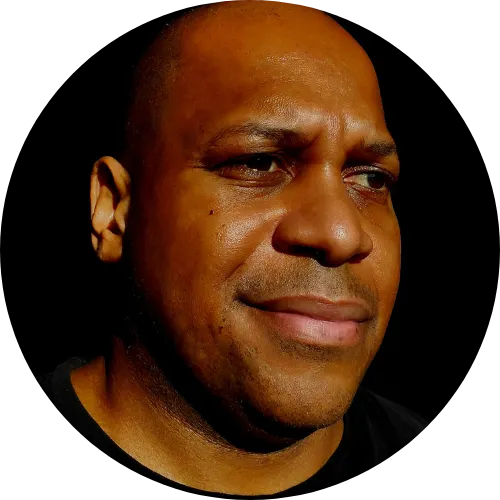
Alan Loyd
Advocate
Driven by a passion for personal and professional growth, I joined Freedom Financial to empower others. With a psychology background and coaching experience, I excel at connecting with people, simplifying concepts, and inspiring action. Combining empathy and evidence-based strategies, I help individuals overcome obstacles and achieve their goals. I’m proud to support Freedom Financial’s vision of a world where everyone can grow and thrive.

Reginald Wiley
Advocate
I chose this position because of the opportunity to serve others. I’ve worked with the SBA Disaster Center & FEMA and developed a strong work ethic based on empathy and compassion for people in a time of need.

Read Our Newest Blogs

The Financial Revolution: Why What You’ve Been Taught About Money is Wrong
“A person can be highly educated, professionally successful, and financially illiterate.” –Robert Kiyosaki
The Grand Illusion of Financial Security
For generations, the path to "financial success" has been drilled into us: go to school, get a good job, save a little, invest in a 401(k), and buy a home. This is the bedrock of the "American Dream" for many, especially those in low-to-middle income brackets who are trying to build a stable future. We are taught that hard work and prudence in a traditional framework—the "earning, saving, and investing methods" sanctioned by society—will inevitably lead to prosperity.
But what if this widely accepted blueprint is not a roadmap to wealth, but a carefully constructed cage that keeps the vast majority working harder for less?
The truth is, much of what passes for financial wisdom today is based on outdated, insufficient, and, frankly, misleading beliefs that primarily benefit large financial institutions and corporations, not you. If you are serious about achieving genuine financial success and control, it is time to recognize that you have been brainwashed by a system designed to keep you dependent. True financial literacy is the key to unlocking the handcuffs of this dependency, empowering you to control your income, your growth, and your future.
Myth 1: The Security of the Savings Account
For decades, the savings account has been hailed as the ultimate safety net. We are told that saving

money is the responsible, adult thing to do. And in a narrow sense, it is better than debt. But if you believe that placing your hard-earned money into a traditional savings account is a pathway to growth or security, you must understand the financial mechanism at play.
When you deposit money into a savings account, you are effectively loaning that money to the bank. They pay you a minuscule interest rate—often less than 0.5% annually. What does the bank do with your money? It doesn’t sit idle in a vault. The bank immediately takes your deposit and uses it to fund loans (mortgages, business loans, auto loans) and investments, for which they charge their customers interest rates ranging from 4% to 25% or more.
The bank is making double-digit returns on your money, all while paying you a tiny fraction of one percent. They are getting paid for the risk they take with your capital. This is not a partnership; it is a transaction heavily skewed in the bank’s favor. While you sleep soundly, believing your money is "safe," the bank is actively using it to build its own immense wealth, paying you a pittance for the privilege.
Furthermore, you are losing the quiet war against inflation. If your money is growing at 0.5% and the cost of living (inflation) is increasing at 3% per year, you are not earning money; you are losing 2.5% of your purchasing power annually. Your dollar buys less and less over time, creating a slow-motion decay of your savings. The security is an illusion.
The Power of the Rule of 72
To grasp how much money you are losing by keeping it in low-interest accounts, you must

understand the Rule of 72. This simple mathematical concept, used by finance professionals, quickly estimates how long it takes for an investment to double.
The formula is: 72 / Annual Rate of Return = Years to Double
If you earn 0.5% interest in a savings account: 72 / 0.5 = 144 years to double your money. (Meaning, if you are 20, you would be 164 years old before your money doubles.)
If you earn 7.2% (a common historical average for the stock market): 72 / 7.2 = 10 years to double your money.
The difference is staggering. One path leads to financial stagnation over generations; the other leads to compounding wealth within a decade. The system wants you focused on the 0.5%, not the 7.2% or higher.
Myth 2: The Trap of Whole Life Insurance with Cash Value
Another cornerstone of traditional financial advice that often hurts low-to-middle income families is

the push to buy whole life insurance with a cash value component. While insurance is necessary, the way this specific product is marketed is designed to obfuscate its true purpose: generating massive commissions and predictable revenue for the insurance company.
Whole life is essentially two products bundled together: a death benefit and an investment vehicle. The problem is that it performs poorly as both. A huge percentage of your early payments go directly to paying the agent’s commission and administrative fees. The money that does trickle into the "cash value" often grows at a rate comparable to or only slightly better than a savings account—meaning, it is likely losing to inflation.
The ultimate deceit is what happens when you die. In most whole life policies, the death benefit paid to your family is the face value of the policy minus the cash value you accumulated. The insurance company keeps the cash value. They used your money for years, paid you a meager return, and then took it back upon your death, paying out only the promised face value. The company wins twice. Your family, who could have benefited from the growth, never realizes the full potential of your investment.
The Alternative: Buy Term and Invest the Difference (BTID)
True financial literacy demands a smarter approach: Buy Term and Invest the Difference (BTID).
Buy Term Life: Purchase a pure insurance product (Term Life) for the duration you need it (e.g., 20 or 30 years while raising children). Term life is dramatically cheaper because it has no cash value component.
Invest the Difference: Take the substantial amount you save each month by purchasing the cheaper term policy instead of the expensive whole life policy, and invest that difference into growth vehicles you control, such as a diversified portfolio of index funds, or non-traditional, privately-structured investments.
By doing this, you keep the investment returns. Instead of allowing the insurance company to keep the growth, you capture it. Savvy investors often target alternative investment structures that can generate average annual returns of up to 13% or more—returns that, when compounded over a lifetime, create vast generational wealth, far beyond what any cash-value policy could ever offer.
Myth 3: The Illusions of Employment Security
We are conditioned to believe that a steady paycheck from a stable employer is the definition of security. But how much security does an at-will employment relationship truly provide?

In most US states, at-will employment means your employer can fire or lay you off at any time, for any reason (or no reason at all), provided it’s not illegal (e.g., discrimination). The stability of your income is entirely controlled by someone else. You have no guarantee you will have a job tomorrow, regardless of your performance.
The rise of massive layoffs, increasing incidences of employers not making payroll, and the lack of control over your hours worked and compensation are flashing red warnings that the traditional employment model is fundamentally insecure. Your employer controls the ceiling of your income, dictates the value of your time, and can sever the relationship instantly.
If your financial health is solely dependent on a single, external source of income that can be cut off without warning, you are financially fragile. True financial success requires a shift from dependency to control.
The Roadmap to True Financial Control
The real path to wealth requires discarding the myths and embracing a different set of principles.

Understanding the Cash-Flow Quadrant
Financial intelligence guru Robert Kiyosaki popularized the Cash-Flow Quadrant, which divides the world into four types of income earners :
E (Employee): Trades time for money. Has a job. (The paycheck trap).
S (Self-Employed): Owns a job. Still trades time for money, but is their own boss (e.g., a doctor in private practice).
B (Business Owner): Owns a system that works independently of their personal time. They hire Es and Ss to work the system.
I (Investor): Money works for them. Their wealth is generated from assets.
The vast majority of the population lives in the E and S quadrants, which offer the least security and the most dependence on time. True wealth is generated in the B and I quadrants, where systems and capital generate income for you, rather than you having to constantly generate income for the system. Financial literacy is the ability to shift your focus from E/S to B/I.
Embracing Alternative Growth Systems
To generate wealth in the B/I quadrants, you must look beyond the traditional 401(k) and savings account. This involves understanding and leveraging non-traditional alternatives where you control the growth:
Private Lending & Structured Investments: Becoming the bank yourself, using your capital to secure predictable returns on assets like real estate debt or other structured products, offering higher, more consistent returns than public markets.
Creating Your Own Business (The B Quadrant): Building systems that solve problems for others and generate revenue that is not capped by an employer’s salary structure.
Truly successful people do not rely on a paycheck or a 0.5% savings account. They understand that the financial system is a game of leverage, and they position themselves to be the leverage point, not the leveraged.
The Legends Who Took the Alternative Path
The greatest successes in modern history were achieved by people who rejected the traditional E/S path and chose the B/I path—the path of financial literacy and control.

John D. Rockefeller (1839–1937): Often cited as the richest American ever. Rockefeller didn't climb the corporate ladder; he built the system. He was a ruthless pioneer of the B quadrant, creating Standard Oil, which controlled 90% of US oil refining. He understood leverage and scale, building an asset—a system—that produced cash flow independent of his time. He didn't seek employment; he created employment.
Henry Ford (1863–1947): Ford revolutionized not just manufacturing with the assembly line, but also the business model itself. He didn't just invent a better car; he built an efficient, self-sustaining B business system that made the car accessible to the masses. He knew his destiny was not in trading his time for wages, but in mastering the means of production and distribution.
Steve Jobs (1955–2011): Jobs didn't rely on a stable employer; he was fired from the company he co-founded. His success stemmed from his relentless pursuit of building disruptive, scalable B businesses (Apple, Pixar) that created entire new markets. He understood that controlling the platform, the product, and the distribution was the ultimate form of financial control.
Elon Musk and Donald Trump: Regardless of one's political view, these entrepreneurs exemplify the B and I quadrants in action. They have built vast empires (Tesla, SpaceX, The Trump Organization) not by clocking in, but by raising capital, controlling assets (real estate, technology), and creating immense, complex systems that generate cash flow. Their wealth is directly tied to the value of the assets and systems they control, not to a paycheck from an external source.
These individuals, and countless others like them, did not achieve success by patiently waiting for their savings account to double in 144 years. They achieved it by understanding the rules of the money game and deciding to own the game, rather than simply playing the role of a pawn. They had the courage to take the alternative path, moving from dependence to self-sovereignty.
Taking Control of Your Financial Future
The time for waiting and relying on flawed, traditional advice is over. Financial literacy is not a luxury for the rich; it is a vital, necessary skill for everyone, especially those in the low-to-middle income

bracket, who have the most to lose from stagnation.
You deserve to understand how to make your money work harder for you than you work for it. You deserve systems that put you in control of your growth, rather than allowing banks and insurance companies to profit from your ignorance. This financial revolution begins when you reject the myths, embrace the truth about leverage and compounding, and choose to become a business owner (B) and an investor (I) in assets you control.
The first step toward true financial freedom is knowledge and a personalized plan of action. Stop allowing the system to dictate your financial destiny.
Take the next step toward personal wealth generation and control by contacting Legacy Protection Services for a FREE financial analysis and plan for action.
Comments:

© 2025 Larsen Family Enterprises Group dba Freedom Financial Services - All Rights Reserved, Published in the United States of America
Contact


