

About Us
Who is Freedom Financial Services?
Our company is a proud partner of Larsen Family Enterprises Group, marketplace of independent businesses dedicated to the shared mission to, empower those we serve to create their personal vision of a "Thriving Successfully i" life.
Freedom Financial Services is committed to the belief that every person has the rightb5o create financial freedom and we empower our clients to create the success they desire by providing training and coaching , as well as access to products and services that will help them achieve their goals.
Our values promote independence and sef-reliance. The Services we provide are focused on promoting these values for our clients. We do not supply "pre-determined" and "done for you" plans and packages of Services that restrict the options available to our clients. Instead, we focus on finding options and opportunities that uniquely meet the individual needs and desires of the people we serve, providing training and support to empower them to monitor, maintain and grow wealth and success for their family.
Book a Free Call to Discuss how We can empower you to achieve your dreams!
Meet Our Team

Jeanette Larsen
Executive Director

Jeanette’s passion for empowering others to create thriving, successful lives drives Larsen Family Enterprises. She believes real success comes from empowering others while committing to personal growth and excellence. Through leading by example, Jeanette inspires others to achieve their goals, leaving a lasting legacy of success and empowerment.

Tricia White
Advocate/Educator
Tricia has an extensive Professional and Management background in finance and business with years of experience working with kids in Junior Achievement helping them learn the skills leading to success.
Tricia brings her business expertise and love for working with kids to Larsen Family Enterprises Group & its partners to support and empower our clients & their kids to create their thriving successfully lives.
Hear From Our Clients
We offer financial
wings to let your
dreams soar higher
Lorem ipsum dolor sit amet, consectetur adipiscing elit. Quisque nisi nunc, tincidunt non nibh non, ullamcorper facilisis lectus. Sed accumsan metus viverra turpis faucibus, id elementum tellus suscipit. Duis ac dolor nec odio fermentum

Ricardo Novoa
Advocate
Ricardo Novoa is an IT professional with 30+ years of experience across industries like banking, healthcare, retail, and utilities. He specializes in developing innovative IT solutions that boost efficiency, cut costs, and drive profitability.
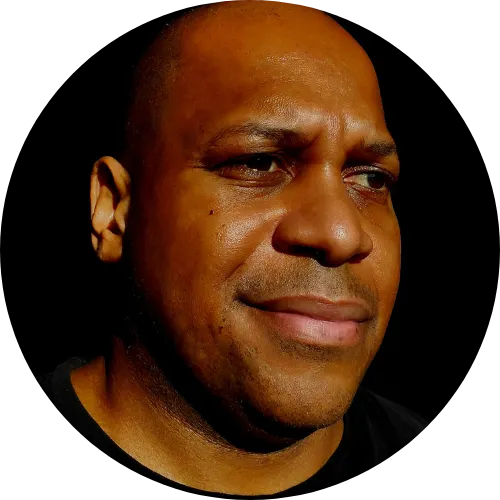
Alan Loyd
Advocate
Driven by a passion for personal and professional growth, I joined Freedom Financial to empower others. With a psychology background and coaching experience, I excel at connecting with people, simplifying concepts, and inspiring action. Combining empathy and evidence-based strategies, I help individuals overcome obstacles and achieve their goals. I’m proud to support Freedom Financial’s vision of a world where everyone can grow and thrive.

Reginald Wiley
Advocate
I chose this position because of the opportunity to serve others. I’ve worked with the SBA Disaster Center & FEMA and developed a strong work ethic based on empathy and compassion for people in a time of need.

Read Our Newest Blogs

The Pivot Protocol – The Art of Agile Adaptation
"Resilience is accepting your new reality, even if it’s less good than the one you had before." ---Elizabeth Edwards
In the "Planning" module, we meticulously constructed a roadmap. We identified milestones, mapped out dependencies, and assigned deadlines. However, as we enter the "Execution" module, we must confront a harsh reality that has toppled many great visions: no plan survives first contact with reality in its original form. Most people view a roadblock as a sign to stop. They interpret friction as a lack of cosmic alignment or a sign that the goal "wasn't meant to be."
In the Success Triad, we call this the "Lineal Fallacy"—the mistaken belief that the path from Vision to Achievement is a straight, uninterrupted line. This misconception is the primary cause of goal abandonment. When the line breaks, the individual feels broken. We understand that the path to a life purpose is actually a series of intelligent redirections. The Pivot Protocol is our formal system for making these redirections without compromising your integrity or abandoning your life purpose. It is the art of being stubborn about your destination but radically flexible about your route.
I. Defining the Pivot: Redirection vs. Relinquishment
Mastering execution requires a profound psychological shift in how we view "failure." To the untrained eye, changing a plan looks like giving up. To the Success Triad practitioner, it is an act of strategic intelligence. We must distinguish between a Pivot and a Quit.
Quitting is the act of abandoning the destination (the Vision) because the current path has become too difficult, boring, or complex. Quitting is a failure of character; it is a violation of the sacred contract you signed with your future self in Module 1. It is a permanent cessation of movement toward your life purpose.
Pivoting is the act of changing the path while keeping the destination fixed. It is an exercise in resilience. A pivot occurs when you realize that your current methodology, toolset, or timeline is no longer the most efficient or effective way to reach your milestone. Instead of stopping, you execute a controlled change in direction.
A pivot ensures that the Momentum of Execution is never lost. When you pivot, you are still moving. When you quit, you are static. The Pivot Protocol allows you to maintain your "Integrity Score" because you are still honoring the vow to achieve the vision, even if the "how" looks different than you originally imagined.
II. The Three Pillars of the Pivot
When you hit a "friction point"—defined as a place where progress on a specific milestone has stalled for more than 72 hours—you are required to apply the Pivot Protocol across three specific dimensions.
1. The Methodological Pivot (The "How")
Sometimes the strategy we drafted in the Planning Module is simply wrong for the current environment or our personal strengths. We often mistake a bad strategy for a bad goal.
The Scenario: You planned to launch a new professional service by using cold outreach on LinkedIn. After three weeks and 200 messages, you have zero leads.
The Trap: Thinking "Nobody wants this service" and closing the project.
The Pivot: You realize LinkedIn outreach isn't working for this specific niche. You don't abandon the service; you pivot to content marketing or referral networking. You are still pursuing the same revenue and impact goal; you have simply changed the delivery mechanism.
2. The Resource and Tool Pivot (The "What")
Human beings have a tendency toward the "Sunk Cost Fallacy"—we stay with a tool or a resource simply because we already spent money or time on it. In the Execution Module, this is viewed as a drag on your vision.
The Scenario: You chose a high-end, complex project management software that requires two hours of data entry every day. You find yourself spending more time "managing the tool" than "doing the work."
The Trap: Forcing yourself to use it because you paid for a yearly subscription.
The Pivot: You strip back to a simple paper-based system or a basic "To-Do" list app. The commitment to organization remains; the tool is discarded. The tool is a servant to the goal, never the master.
3. The Temporal Pivot (The "When")
This is the most common reason people quit. They set an arbitrary deadline, miss it due to life circumstances (illness, family emergencies, or simply underestimating the work), and then feel the "shame of failure."
The Trap: "I said I'd have this done by Friday. It's Sunday and I'm not half-finished. I guess I'm just not cut out for this."
The Pivot: In the Success Triad, a deadline is a target, not a death sentence. A Temporal Pivot involves performing a "Time Audit," identifying the legitimate cause of the delay, and setting a new, realistic date. You maintain the accountability by reporting this change to your partner, but you allow for the reality of human limitations. You are still a "finisher," just on a revised timeline.
III. Skill Acquisition as an Execution Task
One of the most profound realizations in the Execution Module is that stalling is often a symptom of a skill gap. Most "procrastination" isn't laziness; it's the brain's defense mechanism against a task for which it lacks competency. When you encounter a task you cannot complete, your default response is often "I can't do this," followed by a desire to abandon the goal.
The Pivot Protocol reframes this entirely: "I cannot do this yet because I lack [Skill X]."
In this framework, learning becomes a part of doing. If you are building a business and hit a legal or technical wall, your execution task for the next 72 hours is no longer "finish the business setup"; it is "research and acquire the necessary knowledge." By pivoting from performance to learning, you remove the shame of the roadblock and turn it into a milestone of growth. This is the "Adaptation" phase where your character is forged. You are being forced to grow into the person capable of holding the vision you created.
IV. The Evaluative Audit: Quantitative vs. Qualitative Progress
How do you know when it’s time to pivot versus when you just need to work harder? Execution requires constant, dispassionate evaluation. We use two types of data to make this decision:
Quantitative Data: Are the numbers moving? If you are an author and your word count is 0 for five days, you have a friction point. If you are a salesperson and your dials are high but your appointments are zero, you have a data-driven reason to pivot your script or your list.
Qualitative Data (The Flow Audit): How is the "Execution Energy"? If you feel a persistent sense of dread, extreme fatigue, or a desire to hide from the work, it may be a sign that your current method is violating your natural strengths. You don't quit the goal, but you pivot to a method that aligns better with your personality (e.g., pivoting from solo writing to using a transcriptionist because you speak better than you type).
V. Anti-Fragility: Character Growth Through Adaptation
The Pivot Protocol is more than a tactical move; it is a character-building exercise. Nassim Taleb coined the term "Anti-Fragile" to describe systems that get stronger when they are stressed. By using the Pivot Protocol, you become an anti-fragile individual.
Most people are "fragile"—they break when a plan fails. Some are "robust"—they resist breaking but don't change. The Success Triad learner is "Anti-Fragile." When a plan fails, you don't just find a new plan; you learn why the old one failed, you acquire a new skill, and you become a more capable executor in the process.
Every pivot you execute successfully increases your Achievement Quotient (AQ). You begin to develop a "quiet confidence" because you know that no matter what obstacle reality throws at you, you have a protocol to bypass it. This is the ultimate form of personal accountability: you are accountable to the result, not just the plan.
VI. The Social Dimension: Accountability in the Pivot
Pivoting should not be done in secret. If you change a deadline or a method in isolation, it can easily slide into "making excuses." To maintain the integrity of the process, every pivot must be reported to your Accountability Partner using the 3-2-1 Report.
You state the challenge (The Friction).
You state the Pivot (The Adjustment).
The Partner validates the change to ensure it is a legitimate strategic move and not an avoidance tactic.
This external validation ensures that your "flexibility" doesn't turn into "laxity." It keeps the pressure on the destination while allowing the pressure to be released from the specific path.
Conclusion: Stubborn on Vision, Flexible on Details
The journey of execution is where the person you are becomes the person you envisioned. By refusing to abandon your goals and instead choosing to pivot, you are demonstrating the highest form of commitment. You are telling the universe that your Vision is so important that you are willing to change yourself—your skills, your habits, and your methods—to see it through to completion.
Your Vision is non-negotiable. Your Plan is a hypothesis. The Pivot is your greatest tool for ensuring that the hypothesis eventually leads to the truth of your success.
Comments:

© 2025 Larsen Family Enterprises Group dba Freedom Financial Services - All Rights Reserved, Published in the United States of America
Contact


