

About Us
Who is Freedom Financial Services?
Our company is a proud partner of Larsen Family Enterprises Group, marketplace of independent businesses dedicated to the shared mission to, empower those we serve to create their personal vision of a "Thriving Successfully i" life.
Freedom Financial Services is committed to the belief that every person has the rightb5o create financial freedom and we empower our clients to create the success they desire by providing training and coaching , as well as access to products and services that will help them achieve their goals.
Our values promote independence and sef-reliance. The Services we provide are focused on promoting these values for our clients. We do not supply "pre-determined" and "done for you" plans and packages of Services that restrict the options available to our clients. Instead, we focus on finding options and opportunities that uniquely meet the individual needs and desires of the people we serve, providing training and support to empower them to monitor, maintain and grow wealth and success for their family.
Book a Free Call to Discuss how We can empower you to achieve your dreams!
Meet Our Team
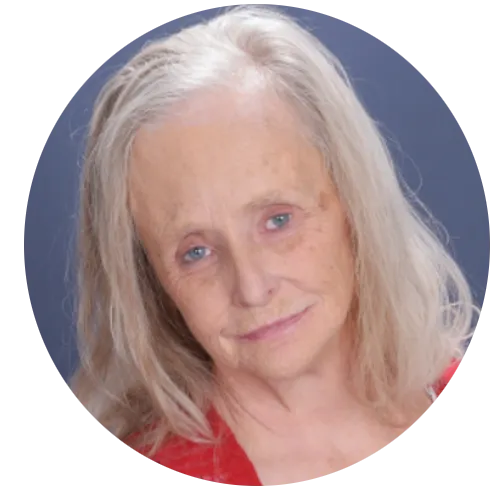
Jeanette Larsen
Executive Director

Jeanette’s passion for empowering others to create thriving, successful lives drives Larsen Family Enterprises. She believes real success comes from empowering others while committing to personal growth and excellence. Through leading by example, Jeanette inspires others to achieve their goals, leaving a lasting legacy of success and empowerment.
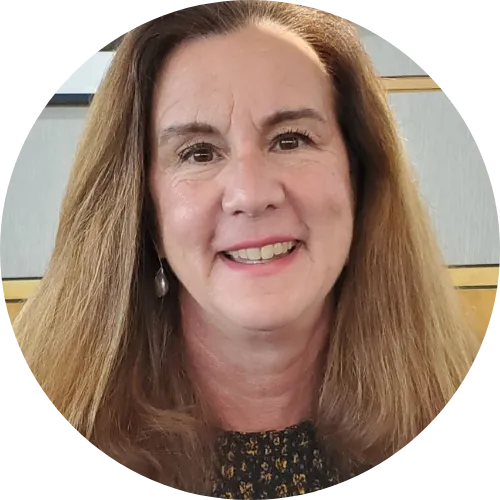
Tricia White
Advocate/Educator
Tricia has an extensive Professional and Management background in finance and business with years of experience working with kids in Junior Achievement helping them learn the skills leading to success.
Tricia brings her business expertise and love for working with kids to Larsen Family Enterprises Group & its partners to support and empower our clients & their kids to create their thriving successfully lives.
Hear From Our Clients
We offer financial
wings to let your
dreams soar higher
Lorem ipsum dolor sit amet, consectetur adipiscing elit. Quisque nisi nunc, tincidunt non nibh non, ullamcorper facilisis lectus. Sed accumsan metus viverra turpis faucibus, id elementum tellus suscipit. Duis ac dolor nec odio fermentum
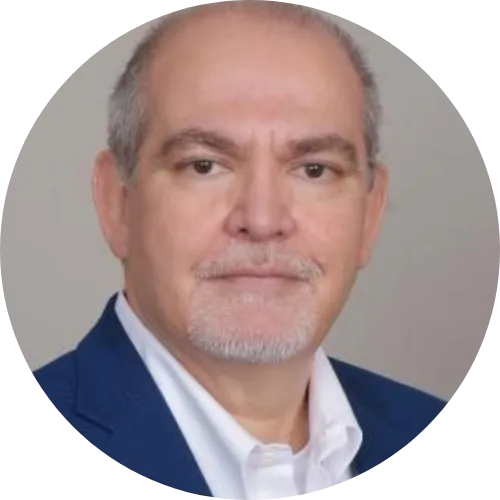
Ricardo Novoa
Advocate
Ricardo Novoa is an IT professional with 30+ years of experience across industries like banking, healthcare, retail, and utilities. He specializes in developing innovative IT solutions that boost efficiency, cut costs, and drive profitability.
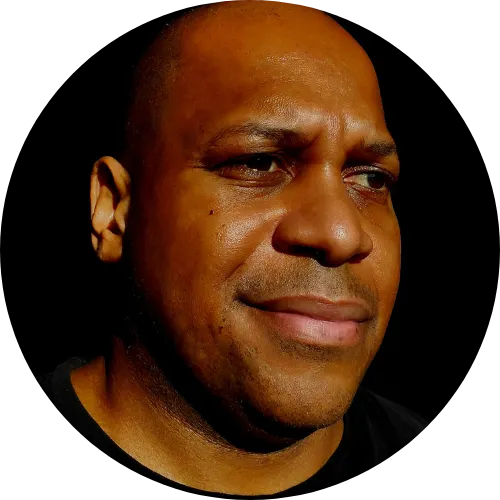
Alan Loyd
Advocate
Driven by a passion for personal and professional growth, I joined Freedom Financial to empower others. With a psychology background and coaching experience, I excel at connecting with people, simplifying concepts, and inspiring action. Combining empathy and evidence-based strategies, I help individuals overcome obstacles and achieve their goals. I’m proud to support Freedom Financial’s vision of a world where everyone can grow and thrive.
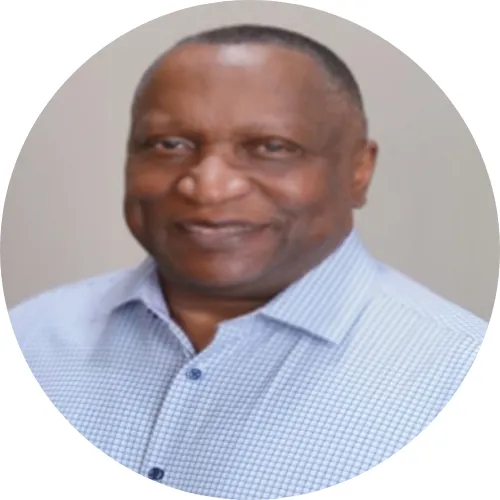
Reginald Wiley
Advocate
I chose this position because of the opportunity to serve others. I’ve worked with the SBA Disaster Center & FEMA and developed a strong work ethic based on empathy and compassion for people in a time of need.

Read Our Newest Blogs

The Accountability Infrastructure – Engineering Your Environment for Success
“People think responsibility is hard to bear. It’s not. I think that sometimes it is the absence of responsibility that is harder to bear.” —Henry Kissinger
Introduction: The Myth of the Lone Achiever
In the modern self-help landscape, there is a dangerous myth: the idea that success is a solo journey powered by nothing but raw, individual willpower. This lesson deconstructs that myth. In the Success Triad, we recognize that while the Vision is yours and the Plan is yours, the Execution is often sustained by the systems and people you place around you.
Willpower is a finite biological resource. On any given Tuesday, your "discipline battery" might be drained by stress, lack of sleep, or decision fatigue. The Accountability Infrastructure is the engineering solution to this biological limitation. By creating external checks and social leverage, you ensure that you continue to act in alignment with your Life Purpose even when your internal motivation is at its lowest. This isn't a sign of weakness; it is a sign of strategic intelligence. It is the practice of designing an environment where failure to execute becomes more painful than the effort of doing the work.
The Two Pillars of Accountability
To operationalize execution, we must distinguish between the two primary forms of accountability: Internal Integrity and External Leverage.
1. Internal Integrity (The Anchor)
Internal accountability is the "vow" you made in the Execution Contract. it is based on the character trait of Honor. It is the ability to look in the mirror and know that you did what you said you would do. However, as we have discussed, internal integrity can be compromised by self-rationalization. We are experts at lying to ourselves. We tell ourselves we "deserve a break" or that "tomorrow will be better."
2. External Leverage (The Guardrail)
External accountability provides the friction necessary to stop self-rationalization. By involving another person or a public commitment, you introduce Social Cost. For most humans, the desire to maintain a reputation of integrity in the eyes of others is a more powerful motivator than a private promise to oneself. We use this psychological drive as a tool to protect the Vision.
The Anatomy of an Accountability Partner
In the Success Triad, an Accountability Partner is not a friend you "hang out" with; they are a strategic asset. Their primary role is to act as a mirror for your character. Choosing the right partner is critical for the Execution Module.
Qualities of a High-Impact Partner:
Radical Honesty: They must be willing to call out your excuses without fear of hurting your feelings.
Alignment, not Competition: They should understand your Vision (from Module 1) but not be in direct competition for the same resources.
Consistency: They must be more disciplined than you are in the specific area where you need the most growth.
The Partner as a "Mirror of Integrity"
When you present your 3-2-1 Report, your partner’s job is to ask the "uncomfortable questions." If you log a "Temporal Pivot" (delaying a deadline), the partner asks: "Is this a strategic necessity, or are you avoiding the discomfort of this task?" This external validation prevents the Pivot Protocol from becoming a "Procrastination Protocol."
Social Leverage: The Cost of Inaction
To make the Accountability Infrastructure truly "bulletproof," we sometimes introduce Negative Stakes. This is the practice of creating a financial or social penalty for failing to hit a milestone.
Research shows that "Loss Aversion"—the desire to avoid losing something—is often more motivating than "Gain Seeking." In this module, we encourage learners to set "Execution Stakes." This could involve:
Financial Stakes: Committing a sum of money to a charity you dislike if you miss a non-negotiable deadline.
Social Stakes: Publicly declaring your weekly milestone on social media or to your professional network.
While this may seem extreme, remember the premise of the Success Triad: Your Vision is sacred. If you are unwilling to risk a few dollars or a moment of social embarrassment to protect your Life Purpose, then you have not yet fully committed to the Vision.
Character Training: Courage and Radical Honesty
Accountability is the "gym" where the muscles of character are built. Specifically, we focus on two traits: Courage and Honesty.
1. The Courage to be Seen
It takes courage to show your "messy middle" to an Accountability Partner. Most people only want to show their highlights. Execution requires the courage to admit when you are stuck, when you are bored, and when you are scared. By being transparent about your friction points, you develop the strength to handle feedback and the resilience to stay the course.
2. Radical Honesty
Honesty in the Execution Module is not just about telling the truth; it is about refusing to hide the truth. When you omit a failure from your 3-2-1 report, you are violating the contract. Radical honesty requires you to own your inaction. The moment you say, "I didn't do it because I was lazy," you regain power over the situation. You cannot fix a problem you refuse to name.
Engineering Your Execution Environment
Beyond people, your physical and digital environment must act as a "Passive Accountability" system. Every object in your workspace should facilitate the "Incremental Facilitation" discussed in Lesson 1.
Visual Cues: Your Vision Board (Module 1) and your Non-Negotiable Contract should be in your direct line of sight.
Friction Reduction: If your execution task requires a specific tool, that tool should be set up and ready the night before.
Distraction Audits: Your digital environment (phone, computer) should be "locked down" during your Execution Blocks. If you have to fight your phone to get to your work, you are wasting willpower before you even start.
The Feedback Loop: Weekly Calibration
The Accountability Infrastructure is not a "set it and forget it" system. It requires a weekly rhythm. In the Canvas Learner Portal, we use the Sunday Calibration:
The Review: Looking at the quantitative data (What was done?).
The Interview: Discussing the qualitative state (How do I feel about the work?).
The Setting of the Stakes: Defining what must be done next week and what the cost of failure will be.
By doing this every week, you turn the "scary mountain" of your Vision into a series of manageable, high-stakes sprints. This builds the habit of achievement. Over time, the external accountability becomes internalized. You begin to act with integrity because you have become a person who enjoys the feeling of being a "finisher."
Conclusion: Completion as a Way of Life
The ultimate goal of Lesson 3 is to realize that you are the architect of your own success. By building a robust Accountability Infrastructure, you are taking responsibility for your human limitations. You are ensuring that even on your worst day, your best self is protected.
Character is not something you "have"; it is something you "do." By choosing to be accountable, you are choosing to be a person of honor, grit, and resilience. You are completing the Triad. Your Vision is the fuel, your Plan is the engine, and your Accountability is the steering wheel that keeps you on the road until the very end.
Comments:

© 2025 Larsen Family Enterprises Group dba Freedom Financial Services - All Rights Reserved, Published in the United States of America
Contact


